services - saas application development
SaaS application development built to scale with subscribers.
Architecture, multi-tenancy, billing, and deployment for subscription software, built by one engineering team so your product does not need a rearchitecture every time you sign a bigger account.
// start here
Tell us what you're building
Loading form…
Trusted by industry giants, enterprises, and startups








definition
What is SaaS application development?
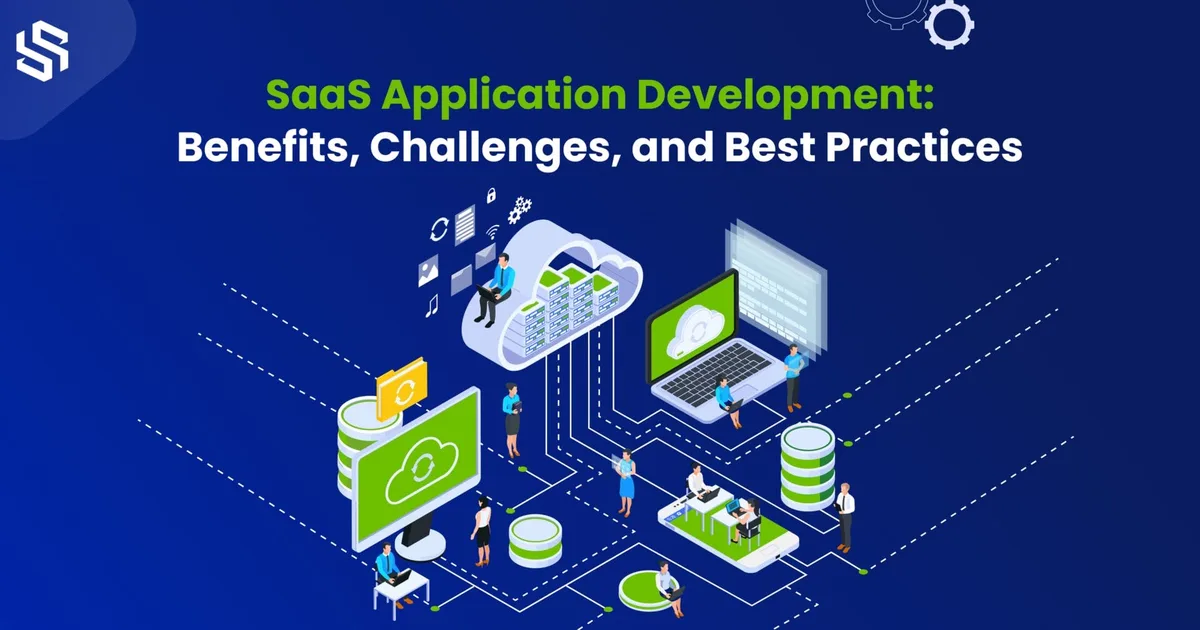
SaaS application development is building software that customers reach through a browser or app on a subscription basis, instead of installing and running it themselves. It covers the product itself, the multi-tenant architecture that isolates each customer's data, the billing logic that turns usage into revenue, and the cloud infrastructure the whole thing runs on.
▼ key takeaways
SaaS isn't a feature set, it's a delivery model - the same product logic can ship as SaaS or as installed software, but the architecture underneath is different.
The global SaaS market is valued at $464.7 billion in 2025, growing at an 11.1% CAGR through 2033 (Grand View Research, 2025).
Multi-tenancy and billing are the two decisions most expensive to retrofit - get them wrong early and a growing customer base forces a rebuild.
You don't need a finished pricing model before you talk to us; you need one architecture conversation that tells you what your product actually requires.
// saas vs. custom web application
What separates a SaaS product from a standard web application? Multi-tenancy and billing. A web application usually serves one organization; a SaaS product serves many customers on the same codebase, each with isolated data, their own users and permissions, and a subscription that has to be metered, billed, and upgraded or downgraded without downtime. That is why SaaS architecture decisions get made at the start, not retrofitted after the first ten customers sign up. Get tenant isolation and billing logic wrong early, and every feature after that gets built on a foundation that will eventually need to be replaced.
capabilities - seven
What our SaaS development team does.
Seven capabilities, one goal: subscription software built to scale with your customer base, not against it.
- 01Custom SaaS development
A SaaS product architected around your workflow and pricing model, not a generic template with a login screen bolted on.
- 02B2B and B2C SaaS development
Different buyers need different onboarding, permissions, and billing logic; we scope for the one your product actually serves.
- 03SaaS architecture and multi-tenancy
Tenant isolation, data partitioning, and scaling decisions made upfront, so growth does not force a rebuild later.
- 04SaaS billing, payments, and subscriptions
Metered billing, tiered plans, and payment processing wired in correctly the first time, not patched together after launch.
- 05SaaS mobile app development
A companion mobile experience for SaaS products where customers expect access beyond the browser.
- 06SaaS cloud development and scalability
Infrastructure built to handle usage spikes and customer growth without a rearchitecture every time you sign a bigger account.
- 07SaaS security and compliance
Data protection and access control built to the standard your customers, and their compliance teams, expect from day one.
method
How does a SaaS development engagement actually work?
A Syndell SaaS engagement runs five stages: discovery and architecture, core product build, billing and subscription logic, QA and deployment, and ongoing support. Every stage produces something you can see and test, not just a status update.
- 01
Discovery and architecture
// outcome
→ a data model, tenancy strategy, and stack decided against your actual scale plans
- 02
Core product build
// outcome
→ the workflows your subscribers pay for, built and working end to end
- 03
Billing and subscription logic
// outcome
→ plans, metering, and payment processing wired in and tested against real edge cases
- 04
QA and deployment
// outcome
→ a tested, staged, production-deployed product, not source code handed off unfinished
- 05
Support and iteration
// outcome
→ monitored, maintained, and extended as your subscriber base and feature set grow
technologies our saas team builds with
- React
- Node.js
- PostgreSQL
- Stripe
- AWS
- Docker
- Redis
saas development, in numbers
global SaaS market size in 2025, projected to grow at an 11.1% CAGR through 2033
src - Grand View Research, 2025of professional developers run their cloud infrastructure on AWS, ahead of Azure at 29.7%
src - Stack Overflow Developer Survey 2024projected size of the global software development market by 2031, growing at an 11.74% CAGR
src - Mordor Intelligence, 2025the honest part
Why does SaaS architecture matter this much?
A SaaS product that works for one customer and breaks at ten is not a smaller version of the real product, it is a different piece of software wearing the same UI. The architecture decisions that make a product scale are the ones that are hardest to change once customers depend on the product daily.
The pattern shows up the same way almost every time: a team builds fast to get the first customer live, skips proper tenant isolation because there is only one tenant to worry about, and hardcodes a single pricing tier because billing logic feels like a later problem. Then customer eleven signs up wanting a different plan, customer twelve reports seeing another company's data in a report, and the team is rebuilding the foundation under a product that already has paying users. Syndell scopes multi-tenancy and billing at the architecture stage of every SaaS engagement, specifically so that growth is a feature update, not a rewrite.
Any fool can write code that a computer can understand. Good programmers write code that humans can understand.
- Martin Fowler
Chief Scientist at ThoughtWorks, Refactoring, 1999
Make it work, make it right, make it fast.
- Kent Beck
Creator of Extreme Programming
recent work
Software that ships and scales.
clutch: 5.0/5 - google: 4.9/5
- // ecommerce analytics
CLTV Management App for D2C Business
a SaaS-style analytics platform giving direct-to-consumer brands a single view of customer lifetime value
read - case - // real estate
Simple Key LLC
a multi-property management platform built for a real-estate and hospitality operator
read - case - // transportation
Transportation and Fleet Management System
a multi-tenant platform giving fleets ranging from single vehicles to full operations centralized tools
read - case
"Syndell's commitment to making a seamless software for us was impressive. They listened, communicated, and explained things well throughout the engagement."
engagement
Which engagement model fits you?
| SaaS MVP | Full SaaS build | Dedicated engineering pod | |
|---|---|---|---|
| Best for | Testing a subscription model before committing to full scope | A defined product ready to onboard paying subscribers | Ongoing feature development across releases |
| You get | Core workflow, basic billing, live fast | Full architecture, billing, multi-tenancy, and deployment | Embedded developers, QA, and a lead who ship continuously |
| Timeline | Weeks to a testable version | Months to a production launch | Monthly, renews |
| Team | Full-stack developer + designer | Full engineering squad | Your composition, our bench |
We skip pricing tables on purpose here - feature count, tenancy model, and integrations are what actually drive cost, and a real number after one conversation beats a guess published in advance. Tell us what you're building.
frequently - asked
Five questions,
straight answers.
01What is SaaS application development?
SaaS application development is building software that customers access by subscription over the internet, rather than installing and running locally. That covers architecture, multi-tenancy, billing, onboarding, and the cloud infrastructure the product runs on.
02How long does it take to build a SaaS product?
A scoped MVP can take weeks to a couple of months. A full SaaS platform with billing, permissions, and multiple integrations typically runs a few months to a year, depending on how many workflows the product needs to support at launch.
03How much does SaaS application development cost?
It depends on scope: feature count, integration complexity, multi-tenancy requirements, and UI complexity all move the number. Costs for a real SaaS product commonly run from tens of thousands of dollars into the low millions depending on scope. Book a call for a real estimate against your actual requirements.
04Do you build multi-tenancy and billing, or just the product features?
Both. Multi-tenancy, subscription billing, and usage-based pricing logic are architectural decisions that are expensive to bolt on later, so we scope them at the start of every SaaS engagement, not as an afterthought.
05Can you take over an existing SaaS product instead of starting from scratch?
Yes. Many SaaS engagements extend or rebuild parts of a product that already has paying customers. We audit the existing architecture first and tell you honestly what is worth keeping before touching anything.
the practice
Explore our software development practice.
Every engagement draws on specialists across the practice. Go deeper on the specific help you need:
- MVP development
validate the subscription idea before committing to full multi-tenant architecture
- Web application development
the broader practice this service draws from for architecture, frontend, and backend work
- Startup app development
for SaaS products that need a companion mobile or web app alongside the core platform
- WordPress development
for the marketing site and content layer that sits in front of your SaaS product
- Shopify development
for SaaS products selling through or integrating with a Shopify storefront
- Bring a dedicated developer onto your team
a dedicated engineer embedded directly in your SaaS team
- AI consulting
for SaaS products that want AI-driven features scoped once the core platform is defined
SaaS products rarely stop at the platform. Most engagements pair the build with our digital marketing practice once the product is ready for its first subscribers, so acquisition and product are not solved months apart.
next issue / your saas roadmap
Start your SaaS application development project.
Tell us what you're building and how you plan to price it - we'll tell you honestly what the architecture needs to look like.