
services - saas application development - custom
Custom SaaS built around your workflow.
A SaaS product architected around your workflow and pricing model, not a generic template with a login screen bolted on.
// start here
Tell us what you're building
Loading form…
Trusted by industry giants, enterprises, and startups











definition
What is custom SaaS development?
Custom SaaS development builds a subscription software product around your specific workflow, customer segments, and pricing model, with multi-tenancy, permissions, and billing designed as core architecture rather than features added onto a generic boilerplate after launch.
key takeaways
The global SaaS market reached $464.7 billion in 2025, growing at an 11.1% CAGR through 2033 (Grand View Research, 2025) — that scale of competition rewards products differentiated by fit, not features copied from a template.
52.2% of professional developers run their cloud infrastructure on AWS (Stack Overflow Developer Survey 2024) — infrastructure choices made early shape what a custom build can support later.
A generic SaaS boilerplate gets account and billing screens live fast, but most real products need permission structures or workflow logic the template never anticipated.
Designing multi-tenancy and pricing logic as core architecture from day one avoids the rebuild that retrofitting them later usually forces.
// custom build vs. boilerplate
A boilerplate is fastest when your product looks like every other SaaS tool: standard accounts, standard billing, standard permissions. The moment your workflow needs something the template did not anticipate — a non-standard permission model, an unusual billing structure, a workflow with steps most tools do not have — the fastest path becomes a custom build designed around that from the start, rather than a series of workarounds bolted onto someone else's assumptions.
-- saas development, in numbers --
global SaaS market size in 2025, projected to grow at an 11.1% CAGR through 2033
src - Grand View Research, 2025of professional developers run their cloud infrastructure on AWS, ahead of Azure at 29.7%
src - Stack Overflow Developer Survey 2024projected size of the global software development market by 2031, growing at an 11.74% CAGR
src - Mordor Intelligence, 2025what's included - five
What a custom SaaS build actually covers.
Five working parts, one goal: a product architected for your workflow, not a template stretched to fit it.
- 01
Workflow-first architecture
Data models and permissions designed around how your customers actually work, not retrofitted onto a generic starter template.
- 02
Pricing model built in
Usage metering, seat limits, or tiered feature gates wired into the product from the start, matched to how you plan to charge.
- 03
Multi-tenant from day one
Tenant isolation and data partitioning decided upfront, so your first ten customers and your thousandth run on the same architecture.
- 04
Integration-ready APIs
A documented API surface for the integrations your customers will ask for, built in rather than bolted on after the first support ticket.
- 05
Onboarding built for self-serve
Account creation, trial logic, and first-run flows designed to get a new customer to value without a sales call, if that is your model.
method
From scoping to launch, four stages.
Every custom SaaS build runs the same four stages: product and pricing scoping, architecture and tenancy design, build and integrate, and launch with a prioritized roadmap.
- 01
Product & pricing scoping
// outcome
-> a defined feature set and pricing model mapped to your target customer
- 02
Architecture & tenancy design
// outcome
-> a data model and tenancy approach that scales without a rebuild
- 03
Build & integrate
// outcome
-> core product, billing, and key integrations built and tested
- 04
Launch & iterate
// outcome
-> a live SaaS product plus a prioritized roadmap for what comes next
recent work
Built around real workflows.
clutch: 5.0/5 - google: 4.9/5
- ecommerce analytics
CLTV Management App for D2C Business
a SaaS-style analytics platform giving direct-to-consumer brands a single view of customer lifetime value
read - case - transportation
Transportation and Fleet Management System
a multi-tenant platform giving fleets ranging from single vehicles to full operations centralized tools
read - case
"Syndell's commitment to making a seamless software for us was impressive."
what to expect
What a custom SaaS engagement looks like
Pricing is scoped against your feature set, tenancy model, and integrations, not a flat template rate. What you get: architecture decisions made for your actual workflow, a billing model that matches how you plan to charge, and a build that does not need a rebuild the moment it scales.
the practice
Custom SaaS builds pair with dedicated SaaS architecture and multi-tenancy work, and route into billing and subscription management once the core product is scoped. See the complete SaaS application development practice.
frequently - asked
About custom
SaaS development.
01What is custom SaaS development?
It is a SaaS product built around your specific workflow, customer segments, and pricing model, rather than assembled from a generic SaaS starter template. The data model, permissions, and billing logic are designed for how your product actually works.
02Why not start from a SaaS boilerplate template?
Boilerplates get you moving fast on generic account and billing screens, but most real SaaS products need custom permission structures, workflow logic, or integrations the template does not anticipate. Retrofitting those later usually costs more than building them correctly from the start.
03How is custom SaaS development different from a general web application?
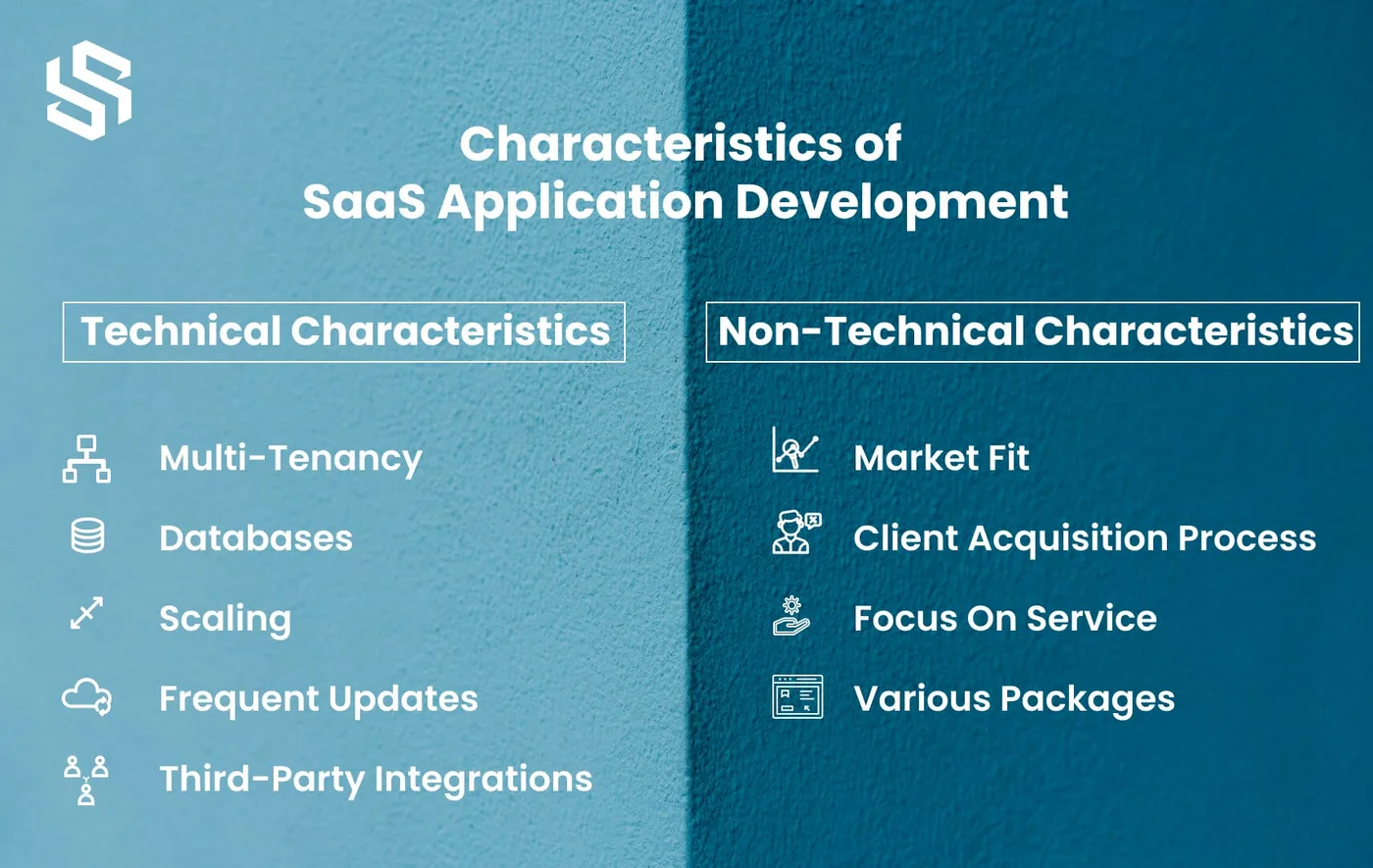
A SaaS product carries specific requirements a typical web app does not: multi-tenancy, subscription billing, usage metering, and self-serve onboarding. Custom SaaS development treats those as first-class architecture decisions, not features added later.
04Can you build on our existing tech stack?
Yes — we scope against your team's existing stack and infrastructure where one exists, and recommend a stack from scratch when there is not one yet, based on your product and hiring plans, not a default preference.
05Do you handle the billing and subscription logic too?
Yes, as part of the build or as a dedicated follow-on — see our dedicated billing, payments, and subscription management work for the detail on how metered and tiered billing gets wired in.
-- next issue - your saas architecture --
Scope your custom SaaS build.
Tell us about your workflow and pricing model — we'll tell you honestly what architecture it actually needs.