
section services -- ai development
AI development services built to reach production.
Consulting, machine learning, generative AI, AI agents, integration, computer vision, and chatbots, under one engineering team that measures success in shipped systems, not slide decks.
// start here
Tell us what you're building
Loading form…
Trusted by industry giants, enterprises, and startups











definition
What is AI development?
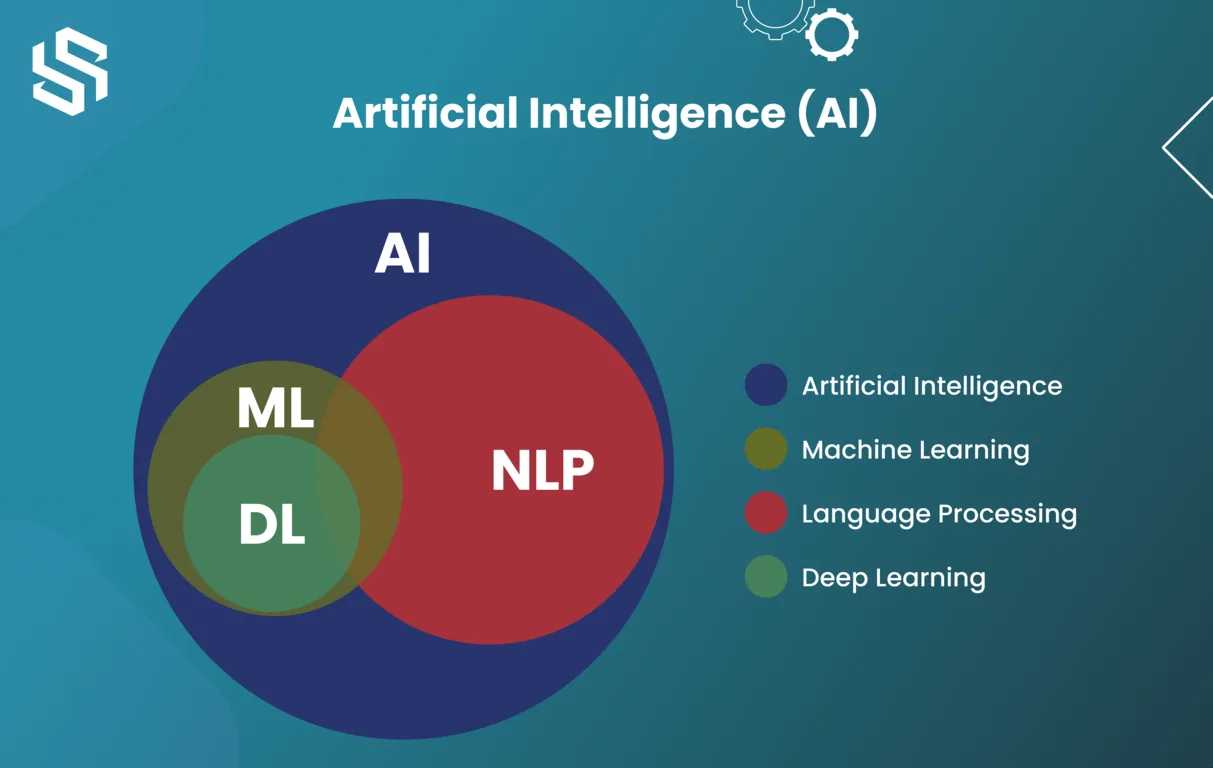
AI development is the practice of building artificial intelligence systems, machine learning models, generative AI, autonomous agents, computer vision, and conversational interfaces, that solve a real business problem and keep working in production, not just in a demo. It covers strategy, model development, integration, and the support that keeps a system accurate after launch.
key takeaways
AI development is engineering, not just strategy -- advice alone does not ship a working system.
Worldwide generative AI spending is forecast to reach $644 billion in 2025, up 76.4% from 2024 (Gartner, 2025).
78% of organizations now use AI in at least one business function, up from 55% two years earlier (McKinsey, State of AI 2025).
Not every automation problem is an AI problem -- rules-based RPA solves a different class of task, and we will tell you honestly which one you need.
// one practice, seven disciplines
AI development at Syndell is not one service, it is seven that work together: consulting to find the use case, machine learning and generative AI to build the model, agents when a task needs to reason and act, integration to connect it to the systems you run, and computer vision or chatbots when the input is an image or a conversation instead of structured data. Most engagements need two or three of these disciplines at once, which is why we run them under one team instead of routing you between separate vendors for strategy, models, and integration. Our engineering studio is based in Ahmedabad, India, serving clients across the US, UK, Australia, and Canada, with overlap hours built into every engagement so you are never waiting a full day for a response.
the practice - eight disciplines
What our AI development team builds.
Eight disciplines under one team. Explore the practice area that matches your use case:
- 01
AI Consulting
From stalled proofs of concept to production AI, engineering first. Use-case triage, model development, integration, and support.
read - practice - 02
AI & Machine Learning Development
Predictive models, MLOps, and production ML systems trained on your own data, not a generic API wrapped in a new interface.
read - practice - 03
Generative AI Development
Fine-tuned foundation models and custom generative systems, built for production, not a demo.
read - practice - 04
AI Agent Development
Autonomous AI agents that reason, plan, and act inside the systems your team already runs, not a chatbot with extra steps.
read - practice - 05
AI Integration
AI capability connected to the CRM, ERP, and tools your team already opens every day, without disrupting production.
read - practice - 06
Computer Vision Development
Image recognition, object detection, and custom vision models trained on your own visual data, not stock photo benchmarks.
read - practice - 07
Chatbot Development
GPT-based conversational bots that resolve real requests, deployed across web, WhatsApp, and Slack, tied into your systems.
read - practice - 08rules-based automation, not AI
RPA Development
Software bots that automate repetitive, rules-based work. This is automation, not AI, and we tell you honestly which one your process needs.
read - practice
method
How does an AI development engagement actually work?
A typical Syndell AI engagement runs five stages: use-case triage, approach decision, model and solution development, integration, and monitoring. Each stage ends with a deliverable you can evaluate, not a status update.
- 01
Use-case triage
// outcome
-> a ranked shortlist of what AI, an agent, or plain automation should actually own, with expected return attached
- 02
Approach decision
// outcome
-> a build-vs-adapt call: fine-tuned foundation model, custom model, or rules-based automation, chosen against your data and budget
- 03
Model & solution development
// outcome
-> a working system: the model plus the APIs, interfaces, and guardrails around it
- 04
Integration
// outcome
-> the AI live inside your CRM, ERP, or product, not a separate dashboard nobody opens
- 05
Monitoring & support
// outcome
-> drift detection and an iteration cadence, so accuracy in month twelve matches month one
models and platforms our ai team works with
- OpenAI GPT family
- Anthropic Claude
- Meta Llama
- LangChain
- TensorFlow
- PyTorch
- Azure AI
- AWS AI services
- Google Cloud AI
- UiPath
-- the ai market, in numbers --
of organizations report using AI in at least one business function as of 2025
src - McKinsey, State of AI 2025projected growth of the global AI agents market between 2025 and 2033, a 49.6% CAGR
src - Grand View Research, 2025the honest part
Does your problem actually need AI?
Not every automation request needs AI. If the task follows a fixed set of rules, moving data from one system to another, filling out a form the same way every time, RPA solves it faster and cheaper. AI earns its cost when the task requires judgment, pattern recognition, or language understanding that a fixed rule cannot capture.
We ask this question before every engagement because getting it wrong is expensive in both directions: building a custom model for a problem a rules-based bot could handle wastes budget on complexity you did not need, and forcing RPA onto a task that needs real judgment produces a bot that breaks the moment reality deviates from the script. The honest answer usually involves both, RPA handling the mechanical steps and AI handling the parts that require a decision. That is why RPA development sits inside our practice list above: it is not AI, and we will tell you clearly when it is the better tool for the job.
The question has moved from whether to use AI, to where and how well.
- McKinsey
State of AI 2025 Survey
recent work
Shipped, not showcased.
clutch: 5.0/5 - google: 4.9/5
- logistics
Transportation & fleet management system
predictive routing software managing live fleets at scale
read - case - education
Language-learning application
personalized learning paths built on user progress data
read - case - entertainment
Entertainment web app
AI-driven content recommendations for a streaming platform
read - case
"They go above and beyond and focus on what's fair, which I highly appreciate."
engagement
Which engagement model fits you?
| AI assessment sprint | Build engagement | Dedicated AI team | |
|---|---|---|---|
| Best for | Testing feasibility before you commit budget | A scoped AI use case, end to end | An ongoing AI roadmap across products |
| You get | Use-case shortlist, data audit, ROI model | Production system, integration, and handover | Embedded engineers who ship continuously |
| Timeline | Weeks | Months, scope-dependent | Quarterly, renews |
| Team | Consultant + data engineer | Full AI build squad | Your composition, our bench |
We don't publish a pricing table here on purpose - your use case and approach decide the real cost, and one conversation gets you a number a generic rate card never could. Tell us what you're building.
frequently - asked
Five questions,
straight answers.
01What does an AI development company actually do?
An AI development company scopes which of your workflows AI can genuinely improve, then builds and ships the system: model development or fine-tuning, the software around the model, integration with the tools you already run, and the monitoring that keeps it accurate after launch. At Syndell that spans AI consulting, machine learning, generative AI, AI agents, AI integration, computer vision, and chatbot development under one team.
02How is AI development different from AI consulting?
AI consulting is the assessment and strategy layer: which use case, which approach, what return to expect. AI development is the engineering that follows: the model, the integration, the production system. Most engagements start with a short consulting phase and move directly into development with the same team, so nothing gets lost in a handoff.
03Which AI approach fits our use case: a foundation model, a custom model, or an agent?
It depends on the task. A fine-tuned foundation model (GPT, Claude, Llama) fits language-heavy work fastest. A custom model fits a narrow, high-volume prediction task a general model handles poorly. An AI agent fits a multi-step workflow that needs to reason and act, not just answer a question. We recommend a path against your actual use case on the first call, not a default answer.
04Is RPA part of your AI development practice?
We build RPA as a separate, rules-based automation practice, not as AI. Robotic process automation follows fixed rules with no learning or reasoning involved, which makes it the right tool for a different class of problem than AI. We route work to whichever one your process actually needs, including a mix of both.
05How much does AI development cost?
It depends on which practice area and how much of the stack you need: a scoped chatbot or integration costs a fraction of a custom model built and deployed from scratch. We don't publish a rate card because it would mislead you in both directions. Book a call and you'll get a real estimate against your actual use case.
beyond ai
Explore the wider engineering practice.
Most AI engagements plug into a bigger build. Go deeper on the surrounding work:
- Hire AI/ML developers
model builders and LLM engineers embedded in your team
- Web application development
the product layer most AI features get built into
- Mobile app development
AI features shipped inside a native or cross-platform app
- Full-stack development
end-to-end engineering when AI is one part of a larger build
- Digital marketing & SEO
AI-powered ad bidding and AEO/GEO visibility work
-- next issue - your ai project --
Start your AI development project.
Tell us where AI should move the needle, or which practice area fits, we'll tell you honestly what it takes to ship it.