
services - full stack - engineer roles
Full stack engineer roles, structured right.
One engineer who owns a feature end to end, or a small pod built for a bigger roadmap -- sized against your actual backlog, not a default team size.
// start here
Tell us what you're building
Loading form…
Trusted by industry giants, enterprises, and startups











definition
What is a full stack engineer role?
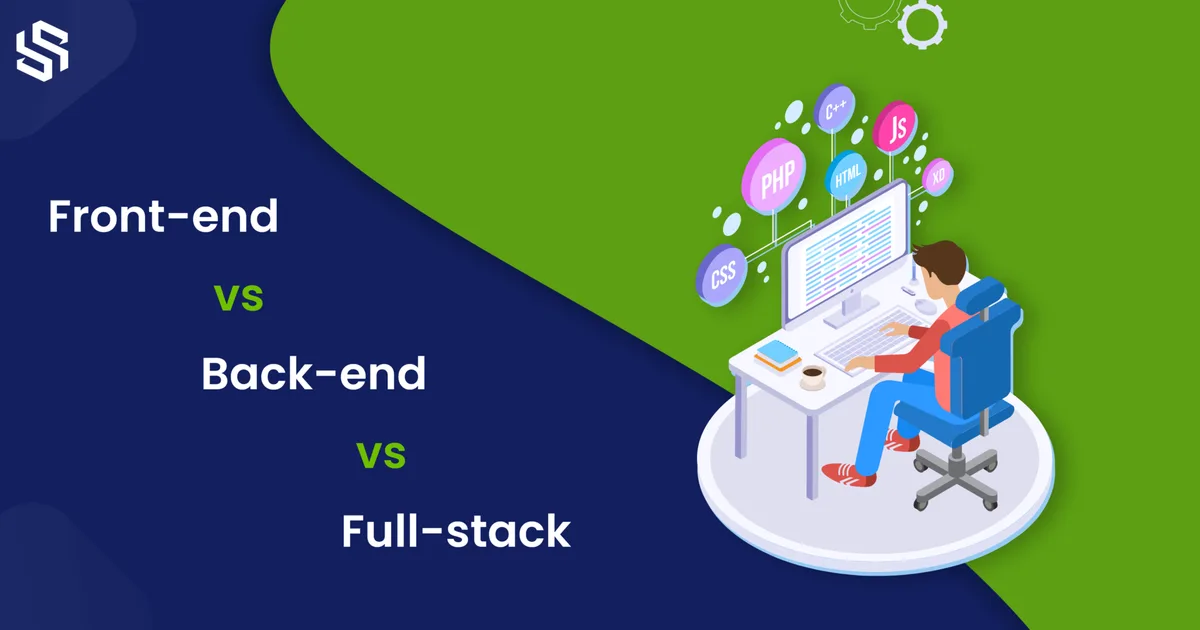
A full stack engineer role covers a feature end to end: the database schema, the backend logic and API, and the frontend interface a user actually interacts with, owned by one person instead of split across a frontend specialist and a backend specialist for every change.
key takeaways
Searches for "full stack engineer" run around 4,290 a month in the US, a sign hiring teams are actively defining this role rather than just researching it.
Full-stack developers earn a median $130K in the US, with 69% of surveyed developers working full-time (Stack Overflow Developer Survey 2024).
Node.js and React are used by 40.8% and 39.5% of professional developers respectively (Stack Overflow, 2024), the most common pairing a full stack engineer works across.
You don't need a fixed headcount decided before you talk to us; we size the role against your actual backlog, not a default team structure.
// why the role exists at all
Why does the full stack engineer role exist instead of always splitting frontend and backend across two specialists? Handoffs are where features slow down. A change that touches both an API response shape and the component that renders it takes two people, two tickets, and two review cycles when split -- or one person and one pull request when it doesn't have to be. The tradeoff is depth: a full stack engineer trades some of the deep specialization a pure backend or pure frontend expert has for the ability to move a feature the whole way without waiting on someone else's queue.
-- full stack engineer roles, in numbers --
median US salary for full-stack developers, with 69% of surveyed developers employed full-time
src - Stack Overflow Developer Survey 2024US searches for "full stack engineer" -- one of the highest-volume full-stack role searches we track
src - Google Keyword Planner via state/tier-assignment.csvof professional developers use Node.js, with React close behind at 39.5% adoption, the most common full-stack engineer pairing
src - Stack Overflow Developer Survey 2024roles - five
How we structure full stack engineer roles.
Five ways this role gets scoped, matched to how much of your roadmap it needs to cover.
- 01
Solo full stack engineer
One engineer who owns a feature end to end, from the database schema through the interface a user actually clicks.
- 02
Full stack engineer embedded in your team
A dedicated engineer who joins your existing sprint process and reports the way your team already reports, not a separate silo.
- 03
Full stack engineering pod
Multiple full stack engineers plus a lead, structured for products with more surface area than one person can safely own.
- 04
Senior and lead full stack roles
Engineers who make architecture calls, not just implement someone else's, for teams that need ownership at the technical-decision level.
- 05
Full stack engineer for a fixed-scope build
A time-boxed engagement scoped to a single deliverable, when you need the role without a long-term hire.
method
How do you bring a full stack engineer onto your project?
A Syndell engineer-role engagement runs four stages: role and scope definition, engineer matching, onboarding and integration, and ongoing delivery.
- 01
Role and scope definition
// outcome
-> a clear read on whether you need one generalist or a small pod, based on your actual roadmap
- 02
Engineer matching
// outcome
-> a full stack engineer matched to your stack and domain, not the next name on a bench
- 03
Onboarding and integration
// outcome
-> the engineer working inside your existing tools and sprint cadence within the first week
- 04
Ongoing delivery and reporting
// outcome
-> shipped work you can see, reported against what got built, not hours logged
recent work
Engineers who ship features, not just tickets.
clutch: 5.0/5 - google: 4.9/5
- business
Business web development
a single engineer owning a feature roadmap from database to interface
read - case - d2c commerce
D2C business management platform
an embedded engineering pod shipping across multiple concurrent workstreams
read - case
"They go above and beyond and focus on what's fair, which I highly appreciate."
what to expect
What bringing on a full stack engineer looks like
Cost tracks seniority and engagement length: a fixed-scope build is priced differently than an ongoing embedded engineer. We don't publish a day-rate card because it would mislead you either way. What you get: a role scoped to your actual roadmap, an engineer matched to your stack, and delivery you can see in your own repo, not a status report.
the practice
Ready to bring an engineer directly onto your team? See hire full stack developers for the direct hiring path, or our MERN stack development practice if your team has already standardized on that stack. See the complete full stack development practice this role draws on.
frequently - asked
About full stack
engineer roles.
01What does a full stack engineer actually do, day to day?
A full stack engineer owns a feature across layers: database schema, backend logic, API design, and the frontend interface a user interacts with. The role exists so one person can carry a feature from idea to shipped without a handoff between a frontend specialist and a backend specialist for every change.
02Is a full stack engineer the same as a full stack developer?
In practice the titles overlap. "Engineer" sometimes signals more architecture-level ownership and "developer" more implementation-level work, but at most companies, including ours, the two terms describe the same role.
03How many full stack engineers does my project need?
It depends on your roadmap, not a rule of thumb. A single feature or an MVP usually needs one engineer; a product with several concurrent workstreams needs a small pod with a lead. We size it against your actual backlog, not a default team size.
04Can a full stack engineer join our existing team, or only work as a separate project?
Both. Most engagements embed the engineer directly into your existing sprint process and tools; some clients prefer a scoped, separate project instead. We structure it either way depending on how your team already operates.
05How much does a full stack engineer cost?
It depends on seniority and engagement length: a fixed-scope build is priced differently than an ongoing embedded engineer. Published day-rate cards tend to mislead more than they help, so we skip them -- book a call for a real estimate against your requirements.
-- next issue - your engineer role --
Bring a full stack engineer onto your project.
Tell us what's on your roadmap -- we'll tell you honestly whether you need one engineer or a pod.