
services - mvp development - no-code
No-code and low-code MVPs, live in weeks.
For ideas that need market validation before any custom engineering is justified, assembled fast on the tools built for exactly that job.
// start here
Tell us what you're building
Loading form…
Trusted by industry giants, enterprises, and startups











definition
What is a no-code MVP?
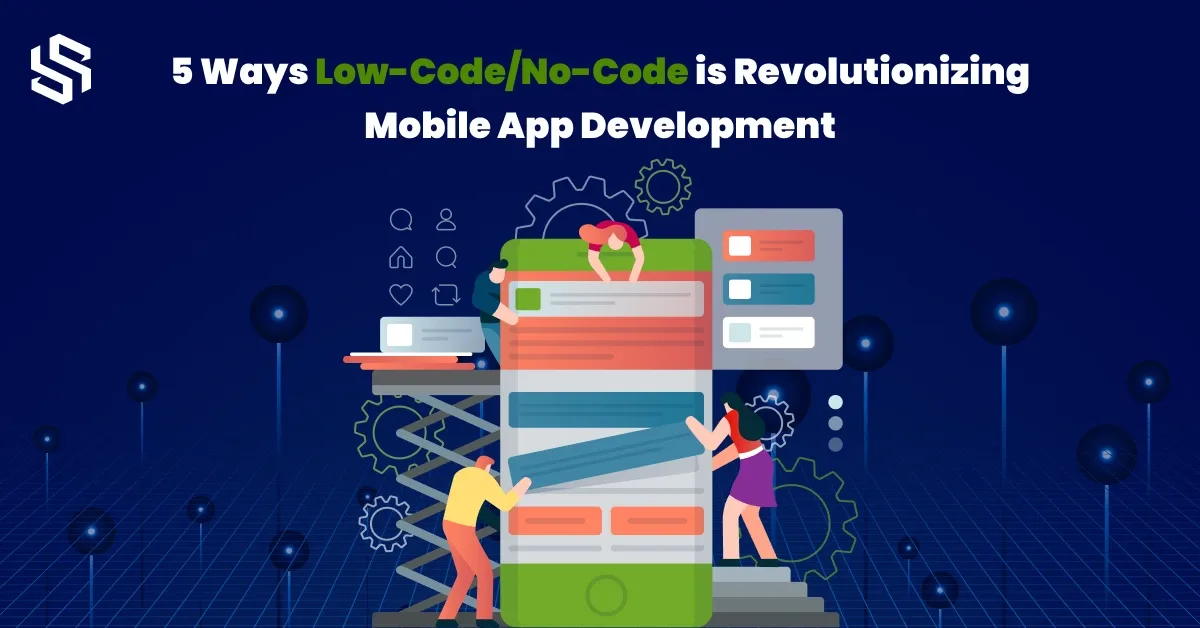
A no-code or low-code MVP is a working product assembled on a visual-development platform such as Bubble, Webflow, or FlutterFlow, with real user accounts, data logic, and payment integrations, instead of hand-written code. It exists to test whether an idea works before custom engineering cost is justified.
key takeaways
43% of failed venture-backed startups since 2023 cite poor product-market fit as a primary reason they shut down (CB Insights, 2026) — the cheaper and faster your first version, the cheaper that mismatch is to discover.
A no-code build can launch in weeks rather than months, giving you real usage data while the assumption behind the idea is still cheap to test.
The global software development market is projected to reach $1.11 trillion by 2031 (Mordor Intelligence, 2025) — that competition rewards ideas validated fast, before a full engineering commitment.
A documented migration path from the start means a validated no-code MVP can move to custom code without a rebuild, so speed now does not cost you flexibility later.
// when no-code beats custom code
No-code makes sense when your core open question is whether anyone will use the product at all, not how it will scale to a million users. Custom code becomes the right call once that question is answered and the product needs performance, integrations, or logic the platform cannot support. Choosing the wrong one first is expensive either way: too much custom engineering before validation wastes budget on an unproven idea, and staying on a no-code platform past its limits creates a rebuild you could have planned for from day one.
-- mvp development, in numbers --
of failed venture-backed startups since 2023 cite poor product-market fit as a primary reason they shut down
src - CB Insights, 2026projected size of the global software development market by 2031, growing at an 11.74% CAGR
src - Mordor Intelligence, 2025JavaScript adoption among professional developers, with Docker used by 58.7% for deployment
src - Stack Overflow Developer Survey 2024what's included - five
What a no-code build actually includes.
Five working parts, one goal: a real, usable product in weeks, not a static mockup.
- 01
Platform selection
Bubble, Webflow, FlutterFlow, or Airtable-backed builds, matched to your workflow instead of picked because it is the tool we already know.
- 02
Fast assembly, real logic
Working conditional logic, user accounts, and data models, not a static prototype dressed up to look like a product.
- 03
A clear migration path
Architecture decisions documented from day one, so a validated idea can move to custom code later without a rebuild from scratch.
- 04
Integration wiring
Payments, email, and third-party APIs connected through the platform's native integrations, so the MVP does real transactions, not simulated ones.
- 05
Launch-ready in weeks
A live, usable product in weeks rather than months, built to get in front of real users while the assumption is still cheap to test.
method
From platform pick to launch, four stages.
Every no-code or low-code MVP runs the same four stages: platform fit, build and configure, integrate and test, and launch with a documented migration plan.
- 01
Platform fit review
// outcome
-> a recommended no-code or low-code platform matched to your specific workflow and integrations
- 02
Build & configure
// outcome
-> screens, logic, and data models assembled on the chosen platform
- 03
Integrate & test
// outcome
-> payments, email, and any third-party APIs wired in and tested end to end
- 04
Launch & migration plan
// outcome
-> a live MVP plus a documented path to custom code if and when it outgrows the platform
recent work
Validated fast, built to last.
clutch: 5.0/5 - google: 4.9/5
- ecommerce
Clothing Manufacturing Web Application
a manufacturing web app scoped tight around the workflow that mattered most first
read - case - education
Language Learning App
a learning platform built around one core loop before the wider feature set followed
read - case
"They go above and beyond and focus on what's fair, which I highly appreciate."
what to expect
What a no-code MVP engagement looks like
Pricing is scoped against your specific screens, logic, and integrations, not a flat template price. What you get: a working product on the right platform for your case, real payment and data integrations, and a documented plan for migrating to custom code if the idea validates.
the practice
No-code MVPs pair well with the same agile, scrum, and lean process used across every MVP build, and follow the same path into custom web application development once validated. See the complete MVP development practice.
frequently - asked
About no-code
MVP builds.
01What is a no-code or low-code MVP?
It is a working MVP assembled on a visual-development platform like Bubble, Webflow, or FlutterFlow instead of hand-written code, so a first version can launch in weeks and validate demand before custom engineering is justified.
02When does no-code make sense instead of custom code?
When the goal is testing whether the idea works at all, not scaling it yet. If your core question is 'will anyone use this,' a no-code build answers it faster and cheaper than a custom one.
03Can a no-code MVP handle real payments and user accounts?
Yes — modern no-code and low-code platforms support real authentication, database logic, and native payment integrations. This is a working product, not a clickable prototype.
04What happens when the MVP outgrows the platform?
We document the data model and logic from day one specifically so a validated idea can migrate to custom code without starting over. That migration plan is part of the build, not an afterthought.
05Which no-code platform do you recommend?
It depends on the product: Bubble and Webflow suit web-first products with complex logic, FlutterFlow suits mobile-first products that need native app store distribution, and Airtable-backed builds suit internal or workflow-heavy tools. We recommend based on your specific case, not a default.
-- next issue - your idea, tested fast --
Get your idea in front of users.
Tell us what you're building — we'll tell you honestly whether a no-code build or custom code fits it better.