
services — digital marketing — ppc
Paid search that pays for itself.
Google, Meta, and LinkedIn campaigns built to a target cost per lead, with underperforming ad sets cut weekly, not left on autopilot.
// start here
Tell us your target cost per lead
Loading form…
Trusted by industry giants, enterprises, and startups










definition
What is PPC inside a digital marketing engagement?
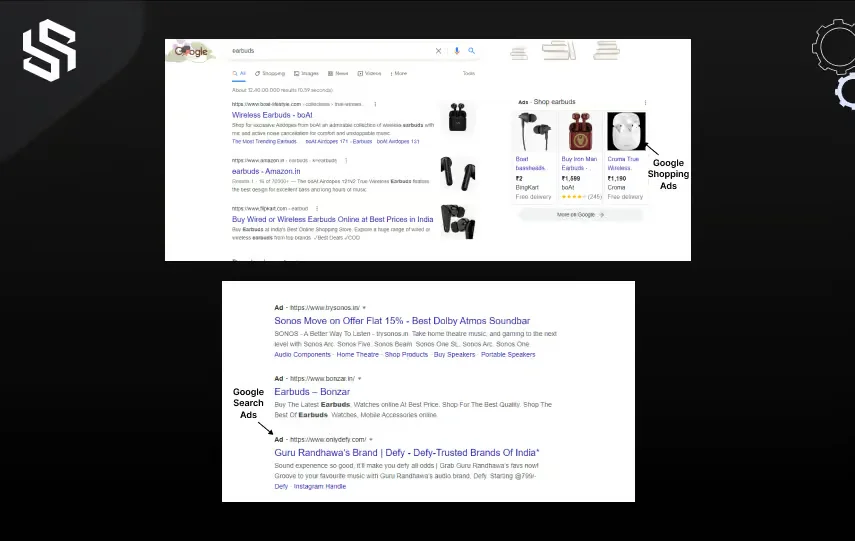
Pay-per-click, or PPC, is advertising you buy by the click across Google, Meta, and LinkedIn: campaigns built and bid against a target cost per lead, with underperforming ad sets cut on a schedule instead of left running. Done right, every dollar reports back to a lead or a sale, not just an impression count.
key takeaways
PPC returns roughly $2 for every $1 spent on average, and that return starts inside days, not months (HubSpot, 2025).
Average Google Ads CPC climbed to $5.42 in the 2025-2026 benchmark year, up from $4.66 the prior year (WordStream by LocaliQ, 2026) — unmanaged campaigns absorb that increase, managed ones adjust for it.
Average Google Ads conversion rate sits at 8.18% in the 2026 benchmark, swinging from 2.64% (finance) to over 16% (pets) by industry — your number only means something measured against your own category.
You don't need a bigger budget first; you need a campaign structure that isn't quietly wasting the budget you already have.
// is ppc still worth it?
Is PPC still worth running when costs keep climbing? Average cost per click rose across nearly every industry in the latest benchmark year, which means an unmanaged campaign is quietly getting more expensive every quarter it runs untouched. But conversion rates rose alongside cost — platforms have gotten better at matching intent, and disciplined accounts have gotten better at catching what's working before waste compounds. The number that actually matters isn't cost per click in isolation; it's cost per lead against what that lead is worth to your business, reviewed often enough to act on. An account bid once and left alone absorbs rising costs. An account reviewed weekly reallocates budget before the waste shows up on an invoice.
-- paid search, in numbers --
average ROI on managed PPC — roughly $2 back for every $1 spent
src - HubSpot Marketing Statistics 2025average Google Ads cost-per-click across the 2025–2026 benchmark year, up from $4.66
src - WordStream by LocaliQ, 2026average Google Ads conversion rate in the 2026 benchmark, ranging 2.64%–16%+ by industry
src - WordStream by LocaliQ, 2026what's included — six
What our PPC team actually does.
Six capabilities, one goal: leads at a cost per lead you can defend.
- 01
Google Search & Shopping ads
Campaigns built around commercial-intent keywords and product feeds, bid to a target cost per lead.
- 02
Meta & paid social ads
Facebook and Instagram campaigns for demand generation and retargeting, tied to the same conversion goals.
- 03
LinkedIn B2B campaigns
Account and title-level targeting for B2B offers where the buyer isn’t searching yet.
- 04
Landing pages & conversion tracking
Pages built to convert the traffic you’re paying for, wired with tracking that survives an audit.
- 05
Bid & budget management
Weekly adjustments that shift spend toward what’s converting instead of a set-and-forget bid strategy.
- 06
Reporting against cost-per-lead
Monthly reporting tied to leads and cost per lead, not just clicks and impressions.
method
How does a PPC engagement actually work?
A Syndell PPC engagement runs five stages: an account audit, strategy and campaign structure, build and launch, weekly bid and budget optimization, and monthly reporting against cost per lead.
- 01
Discovery & account audit
// outcome
-> a scored review of your current campaigns (or a clean-slate plan if you’re starting new)
- 02
Strategy & campaign structure
// outcome
-> a channel and campaign structure built around a target cost per lead
- 03
Build & launch
// outcome
-> live campaigns across the agreed platforms, with tracking verified before spend starts
- 04
Weekly bid & budget optimization
// outcome
-> underperforming ad sets cut and budget reallocated, reviewed weekly not quarterly
- 05
Monthly reporting
// outcome
-> a report showing cost per lead by channel and what changed
recent work
Campaigns that ship leads.
clutch: 5.0/5 - google: 4.9/5
- logistics
Transportation & fleet management system
logistics software managing live fleets at scale
read - case - real estate
Short-term property management platform
demand-driven booking platform built for paid and organic acquisition
read - case
"Despite the time differences, the team has stayed responsive and is easily accessible — their timely approach is commendable."
what to expect
What a PPC engagement looks like
Management fees and ad spend are quoted separately, and neither is a flat number until we've reviewed your account or category. What you get: an audit of your current setup (or a clean-build plan if you're new to paid), a target cost per lead, and weekly optimization instead of a campaign launched once and left alone.
the practice
PPC works best paired with a landing page built to convert and a brand that already earns trust: see our branding practice, or pair paid search with SEO for visibility that doesn't stop when budget does. See the complete digital marketing services we run, or explore paid social as a companion channel.
frequently - asked
About our PPC
management.
01How much does PPC management cost?
PPC management fees and ad spend are two separate numbers, and both depend on your industry's cost per click, currently averaging $5.42 across a 2025–2026 benchmark of 13,000+ campaigns, ranging from roughly $1.60 in arts and entertainment to $8.58 in legal services. We scope both after reviewing your account and category rather than quoting a flat fee blind.
02Should I run Google Ads or Meta Ads first?
It depends on intent. Google Search ads capture people already searching for what you offer, which usually converts faster for high-intent purchases. Meta and LinkedIn ads work better for demand generation, reaching people who aren't actively searching yet. Most accounts eventually run both; we typically start with whichever platform matches how your buyers currently find you.
03How fast will PPC produce results?
Campaigns can go live within days, but the first two to four weeks are a learning phase — the algorithm and our team are both gathering data on what converts. Meaningful, stable cost-per-lead numbers usually show up by week four to six, once underperforming keywords or audiences have been cut and budget has shifted to what's working.
04Do you build the landing pages too, or just run the ads?
Both, when it's part of the scope. A well-targeted campaign pointed at a weak landing page still under-converts, so landing page and conversion tracking setup are part of a full PPC engagement, not an assumed extra someone else handles.
05How do you decide when to cut an underperforming ad set?
Against a cost-per-lead target set at the start of the engagement, reviewed weekly rather than quarterly. Ad sets that are clearly missing the target after enough data has accumulated get paused and the budget gets reallocated to what's converting — not left running on the theory that it might improve.
-- next issue - your paid search --
Start your PPC engagement.
Tell us your current cost per lead — we'll tell you honestly whether it's the account or the category that's driving it.