
case study -- Transportation and logistics
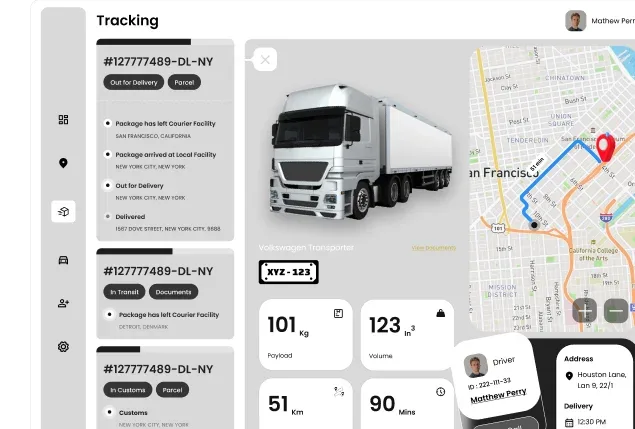
Transportation Tracking Management App
A trucking dispatch platform connects loads to drivers, keeps them compliant, and pays them, all from one system.
- industry
- Transportation and logistics
- region
- United States
- timeline
- November 2023 - ongoing
project snapshot
Syndell built a trucking dispatch platform on Node.js and DynamoDB for a US logistics client, adding load matching, real-time HOS compliance monitoring, and Stripe payments. Live since November 2023, replacing four disconnected manual tools with one system drivers actually use.


overview
A dispatch-driver logistics platform in the USA
Trucking dispatch is a matching problem, a compliance problem, and a payments problem happening at the same time. A United States logistics client asked Syndell to build a platform connecting dispatchers and drivers that could handle all three without adding friction to a job that already runs on tight schedules. Syndell has run the engagement since November 2023, covering web development, mobile app development, and backend development on Node.js and DynamoDB.
the challenge
What A dispatch-driver logistics platform in the USA needed to solve
Every one of the client's pain points traced back to the same root cause: dispatchers and drivers were working from different, disconnected pictures of the same load.
- 01
Difficulty matching loads to driver preferences, location, and equipment
- 02
Managing Hours of Service (HOS) regulations to avoid compliance violations
- 03
Lack of clear dispatcher-driver communication and route visibility
- 04
Uncertain payment schedules and rate disputes between dispatchers and drivers
- 05
Inefficient driver-to-load matching causing delays
- 06
Fuel consumption and route optimization concerns going largely unmanaged
- 07
Manual paperwork processing slowing down document management
the solution
What did Syndell build for A dispatch-driver logistics platform in the USA?
Syndell built the platform on Node.js with DynamoDB, integrating Stripe for payments so drivers could be matched, monitored for compliance, and paid from the same system.
A load marketplace with filtering by location, qualifications, and availability
Real-time HOS monitoring with violation alerts before they become compliance issues
Optimized route generation with live traffic integration
A direct dispatcher-driver messaging system for real-time communication
Secure Stripe payment processing built into the platform
Electronic paperwork submission, replacing manual document handling
Performance reporting and analytics for fleet and driver oversight
technology stack
- Node.js
- DynamoDB
- Stripe
the outcome
What did this project achieve?
The platform brought load matching, compliance monitoring, communication, and payments into one system, replacing what had been separate manual processes for the client's dispatch operation.
results below are self-reported by the client, as published in the original case study on syndelltech.com
A unified load board matching drivers by location, qualification, and equipment
Real-time HOS violation alerts supporting proactive compliance management
Digital payment processing replacing uncertain, manual payment schedules
Electronic paperwork and messaging replacing manual, disconnected communication
what this means for you
If your dispatchers and drivers are working from different, disconnected pictures of the same load, adoption is your real risk, not features. Your platform needs to remove friction, the way this one replaced four separate tools with a single system drivers actually use.
why it worked
Dispatch platforms succeed or fail on whether drivers actually adopt them, and adoption depends on the platform removing friction rather than adding a new app to check. Building load matching, HOS compliance, messaging, and Stripe payments into one system meant drivers had one place to work from instead of four disconnected tools. DynamoDB's throughput at scale was a deliberate choice for a platform where load data, location updates, and compliance alerts all need to write and read quickly during active dispatch hours.
This project drew on Syndell's mobile app development practice. Source case study reviewed on the live Syndell site at syndelltech.com.
more work
Related case studies
frequently asked
Questions about this project
01How does the platform prevent Hours of Service violations?
Syndell built real-time HOS monitoring with violation alerts, so dispatchers and drivers see compliance risks before they become violations, not after.
02Can loads be matched to drivers automatically?
Yes. The platform includes a load marketplace with filtering by location, qualifications, and availability, replacing the inefficient manual matching the client relied on before.
03How are drivers paid on the platform?
Syndell integrated Stripe for secure payment processing directly into the platform, replacing the uncertain, manual payment schedules that caused rate disputes.
04Why was DynamoDB chosen for a dispatch platform?
DynamoDB's throughput at scale supports a platform where load data, location updates, and compliance alerts all need to write and read quickly during active dispatch hours.
next issue -- your project
Have a project like this in mind?
Tell us what you're building. We'll tell you honestly what it takes to ship it well.
proof -- A unified load board matching drivers by location, qualification, and equipment